
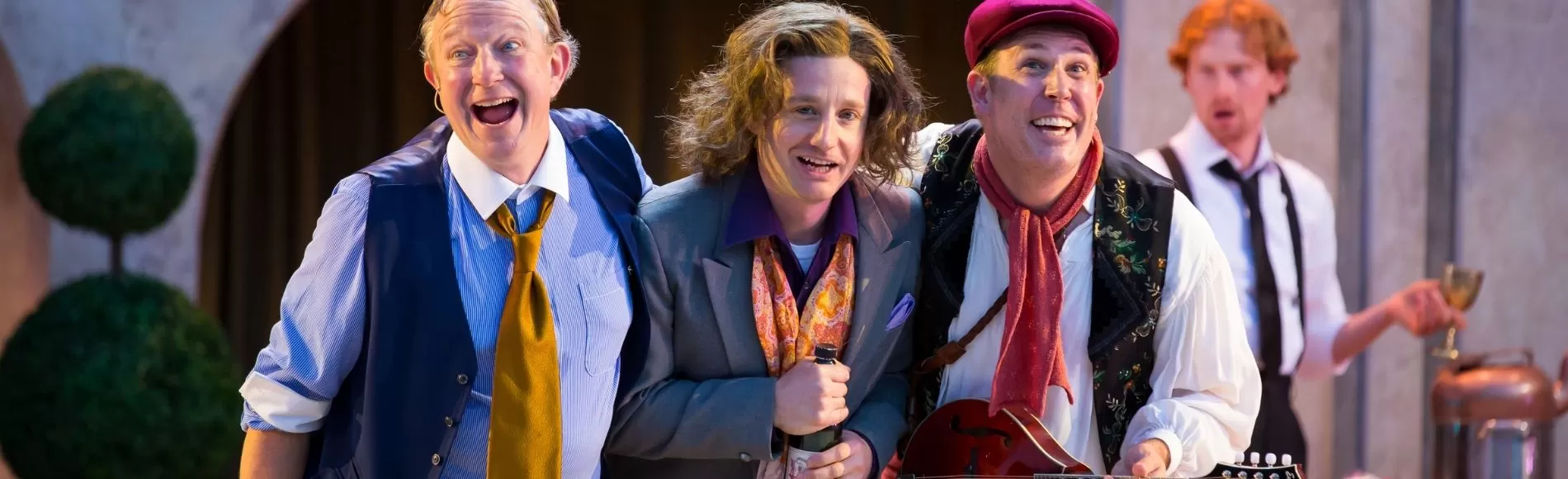
Dramaturg's Note on “Twelfth Night”
June 2, 2026
By Amanda Giguere, Colorado Shakespeare Festival Dramaturg
Colorado Shakespeare Festival's dramaturgs research the historical, cultural and literary context of a play, helping illuminate its themes, language and relevance for today's audiences.
Twelfth Night likely premiered in 1601 for Queen Elizabeth’s twelfth night celebration, a holiday of misrule and foolery. Foolery, indeed, abounds in Shakespeare’s play, with “fool” and its variations appearing 80 times.
Fools have a steady presence in civilizations throughout history, ensuring leaders don’t take themselves too seriously. From Ancient Rome to Renaissance England, wealthy and royal households hired court jesters for entertainment. Often skilled in playing music, singing, or juggling, professional fools were permitted to speak the truth, tell jokes, and poke fun at the ruling class. Much like today’s stand-up comics and late-night talk show hosts, professional jesters could defuse challenging situations through humor.
Henry VIII’s court jester, Will Sommers, entertained guests, lifted the king’s spirits, and even appeared in the royal family’s portrait. Queen Elizabeth I was fond of Richard Tarlton, a comic actor who frequently entertained her at court, and could reportedly “undumpish” her moods. Tarlton, who died in 1588, may have inspired Shakespeare’s Yorick in Hamlet.
Shakespeare’s early fools were likely played by actor Will Kempe, known for his lively dancing and comic chops. He probably originated the roles of Bottom (A Midsummer Night’s Dream), Dogberry (Much Ado About Nothing), and Peter (Romeo and Juliet). By 1599, the singing actor Robert Armin replaced Kempe in the company. Armin’s skills may have influenced Shakespeare’s writing; with Armin playing the clowns, Shakespeare’s fools evolve, becoming more musical, more melancholy, and more philosophical.
Scholars believe Armin played Feste in Twelfth Night (early modern pronunciation may have rhymed “Feste” and “jester”). “Feste” comes from the Latin festum, meaning holiday or feast. It’s the same root word that gives us words like festival and festivities (appropriately, we are the Colorado Shakespeare Festival). Feste’s name is only spoken aloud once in the play. The rest of the time, he’s referred to as the fool.
In Twelfth Night, the truth-telling fool sings the final words:
A great while ago the world begun
With hey, ho, the wind and the rain,
But that’s all one, our play is done,
And we’ll strive to please you every day.
Tickets for CSF’s 2026 production of Twelfth Night are on sale now at coloradoshakes.org.